Executor of the Shit Show

Early in April, my ex-husband (of 26+ years), passed away in hospice from organ failure due to his alcoholism. I had known for more than a decade I was his executor, and I was his power of attorney, so I was involved as soon as he entered hospice. What I really was not prepared for was the extent of his mental health decline over the last several years.

We had always had an unusual relationship. There was certainly plenty of contentiousness, and there would be many exchanges where I would have to say, “I’m done talking about this,” because he would be contrary on his perspective and expect me to think as he did, or act in a manner he wanted. He never understood (accepted?) my remarriage, and my having more children. There was a lot of conflict, and at various points, I’d have to restrict how he could contact me. For example, when he was drinking, he wanted to call at 2 in the morning, so he wasn’t allowed to call the home phone anymore. While he was drinking, he would lambast me on Facebook, so he was blocked from posting. We communicated primarily through messenger or text, as calls got increasingly difficult as his condition progressed. But, he trusted me. That was a constant. He always trusted me to do right by him, and by our kids.

I always sought to keep him in the loop regarding his children. I informed him of life successes they were facing, and challenges when those hit. I always supported him finding someone else to love and encouraged him to start new relationships (or rebuild past ones, like his relationship with Melissa). I accepted that I would be his executor because I didn’t want to place that burden on our grieving children.

Unfortunately, his affairs were a mess. There was no organization for paperwork, for record keeping, for financial statements and bills. Almost all the bills were overdue. More critically, each time one of his loved ones passed away (like his mother, or his stepfather, or his uncle went into care), he brought their stuff into his house. He didn’t sort it and go through it, he kept it. He hoarded it. He shopped Facebook marketplace, and Craigslist, and estate sales. He kept bringing more and more things into his home.

When we walked into his house for the first time there were barely paths accessible to navigate through the piles and piles of stuff. There was evidence the pets he’d had were not properly cared for. There was everything you would expect to see if you’d watched an episode or two of Hoarders. I walked in, sat down, and started sobbing. I wasn’t sobbing over my grief for his loss – I was sobbing for the degree of work I knew lay ahead of me.

I’ve done everything I can to prepare my documents, my legal forms, and yes, even my home, for when I die. I don’t want to foist any additional burden onto my loved ones. I have a tough time wrapping my head around people who refuse to acknowledge we are all mortal. Death comes for us all. Show consideration to your loved ones and be prepared.

If I’m off the radar for a month or two, it’s because we’re making repeated trips to Kansas to clean out trash, organize the home for sale, and bring home whatever treasures the kids may want. I couldn’t have done anything to help my ex-husband prepare, but I could have been more mindful of his deterioration, and I feel sad that I was so clueless. I’m also angry; angry he got to this state, angry he drank his life away, angry he just gave up. I know it will be some time to sort through all that.

Have your affairs in order, people.

Finally 50!

It’s been over a year and a half since I’ve written, but life has been incredibly busy. Yes, it is for all of us, I know. Our homeschooling stint only lasted for a year, before Miles and Ruth decided that even though they hated public school, they hated homeschooling more. So, back to the public school for them. Nathan is still working double-duty, farming to feed his soul and traveling on the road welding to afford to farm. Rebecca is home for a while, regrouping to sort through where she wants to be for her next quarter-life, and Addison is marrying his soul mate and moving to Chicago, where a phenomenal job awaits post-residency. Dustin and his partner live a ¼ mile up the road and we get to enjoy them often. Although we don’t see Grace as much as we’d like, she made it over for the holidays, which was wonderful.

But the big news – the big shift – is I turned 50. I didn’t have a big party. It wasn’t because I don’t have a score of people who love me and were well-wishing, but just because I was recovering from my hip replacement (my 2nd) and have shoulder surgery next week (rotator cuff, with a pretty bad tear I’ve been struggling with for 9 months). Although I wasn’t partying physically, I am absolutely rejoicing in this phase of life.

I’m healthier than I’ve been, possibly ever, in my adulthood. I’m becoming stronger and fitter. I’m able to keep up with our demanding schedule without too much drag. I’m mentally stimulating myself regularly with self-help and “me time” reading for fun. My marriage is better than it’s ever been, and Nathan and I are celebrating 16 years married (18 years together) this May. I’ve got amazing relationships with my girlfriends, and plenty of time with my adult children. I’ve got nieces fulfilling any “grandchild” urges I may experience (which, truth be told, are not lasting nor frequent). But it’s nice to hold a newborn when I want to get a good baby sniff, then pass the child back to their parents. I’m planning a trip out to visit Dad this fall, and we’re all looking forward to that time. I’m blessed with a solid relationship with my sister, and my brother is my biggest supporter and closest confidant. My career is fulfilling, financially and emotionally. When I experienced a supervisor I don’t enjoy working with, I just prioritize my mental health and quit that department. My ability to set and enforce boundaries is well-honed, and I’m glad I emphasized developing that skill over the last decade.

Life is so good. I’ve no desire to live to 100. Nathan and I talk about this a lot (because he wants to, and I vehemently do not). However, I think I’m solidly set for the next 25 years, and looking forward to what comes next. The 50s are going to be my jam!

Back to the Classroom

Today is a rather momentous day, as I head back to the classroom. I haven’t taught a face-to-face class since before Ruth was born. My last was a class for Central Methodist University, and I was pregnant, teaching a few classes while the older kids watched Miles at the time. I hadn’t realized how much I missed campus teaching until I saw the job posting for State Fair’s Boonville campus. I’ll be teaching Introduction to Sociology, and only need to go in one day a week, since I’m officially doing a “hybrid” option, filling up more activities online to meet the credit requirements.

Still, it’s a transition, and a big one. I took Miles and Ruth last week to the campus and showed them around the spaces in case they wanted to go with me occasionally. The site director, Bethany, made it entirely too appealing, showing us where there’s a student game room, and snacks, so I may have gotten more than I bargained for. I think back on how much Addison and Rebecca learned from coming along to campus classes with me, though, and I’m excited by the prospect. There was more than one sternly issued warning that if they abuse privileges (run through the halls, disturb me while I’m teaching, get in a fighting match in the student’s game room) they simply wouldn’t get to come back. I’m not sure it resonated, so we will see.

Both of these youngers are homeschooling again, effective this fall. We love the Higbee district, and the academics there were solid. They liked the teachers. It was just a struggle for the social aspect. It has surprised me how young girls are transitioning to be mean girls (fyi, it’s not high school anymore, or even middle school). We also didn’t like the reliance on testing.

Miles and Ruth aren’t doing the traditional homeschooling, but a public-school online option available here in Missouri. It was a rough first week, but they’ve gotten into the flow of it well enough. I told them until they could show me they were self-disciplined enough to stay on top of their workload, this would be the only option. We’ll probably start shopping for a different curriculum next Spring. Miles’ main beef was that he wants me to teach him – all subjects, all the time – but I’ve explained I still must *work* so that wasn’t feasible. It’s fun to think about curriculum shopping again, and watching their learning styles emerge so I can pick the best one for their needs.

Nathan’s back at a job, albeit one closer to home in Callaway. He’ll still be able to come home once a week, which is better than some of the options. He’s wrapped up haying, and like many farmers experienced this summer, it was a rough season that didn’t leave us much security for the winter. Tackling the kids’ needs and a new work situation without him here at hand will be challenging as well, but we will manage. I’ve started taking a few moments each day before the kids get up to have my “self” time, and that helps me charge up. Maybe it will result in more blog writing, but no guarantees on that.

It’s time to get ready for class. 😊

Midlife musings

I cannot believe it has been two years since I’ve written, but it’s been a rather rough two years, mentally and emotionally. As I’m preparing for another birthday closer to 50 than 40, I enjoyed (or not) a couple of hours of menopausal reflections last night in the wee hours.

I do not mind birthdays. I accept aging. I wish that my body parts weren’t breaking down – in fact, it was likely my knee that woke me, twinging a bit with the bad weather. This makes me feel like Grandma, who always said she could feel a storm coming in with her joints. Now I understand, Granny Sue.

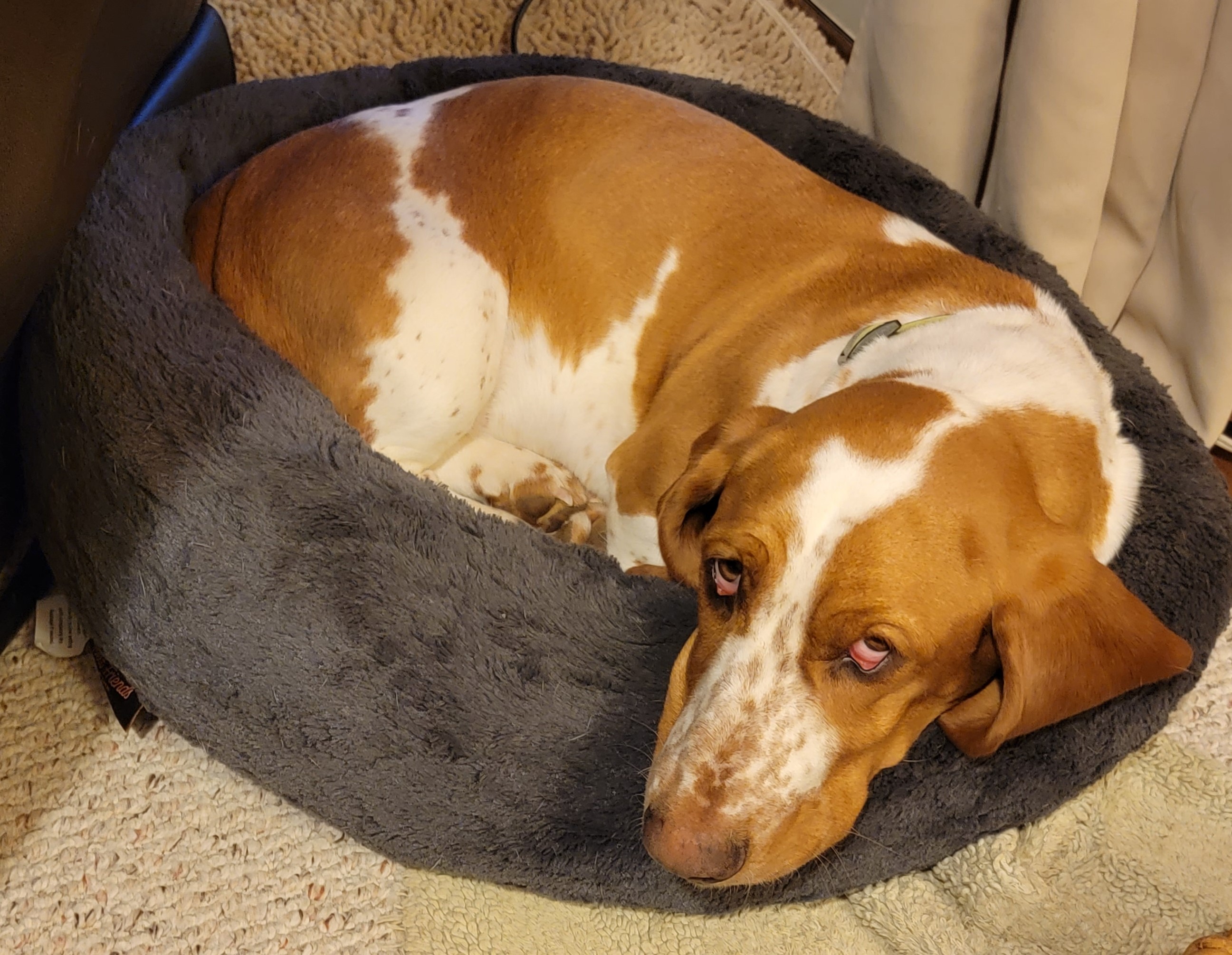
A lot has happened in the last couple of years, with the kids undergoing major life transitions for both the adults and the youngers. The trip to Europe was a life-changing event for me, leading me to question the types of relationships I want to have in my life, and how I want to engage with others on a deeper level. Miles and Ruthie are ‘needing’ me less and less, and when Nathan travels for work, it’s quiet around here. Hannah the Basset provides affection, but I’m not sure I want the measure of my fulfillment to come from a dog.

The cows, although satisfying for Nathan, don’t respond well when I schlep down to chore singing and chatting to them. I found myself watching birds for almost an hour yesterday, wondering about their friendships and conflicts and who was going to get the prime real estate of the birdhouse. Then I resolved dominance will likely prevail, as it does in our society, which sent me along a sad path lamenting the trajectory of humans. Interactions with animals are amusing enough but I’m no Disney princess for that to meet my social needs.

I need more to do. Let’s call it a side quest. Having substituted for the local school (the “last case” call), I’ve determined that interactions with other children are not what’s missing. In fact, that’s more of a source of frustration, as I’ve established through the kids’ various extra-curricular functions. I am not a fan of today’s parenting ideologies or children’s technological dependencies. Plus, kids are still vulnerable, so I can’t respond honestly when they’re annoying, and they’re frequently annoying. At least I am self-aware. I have wonderful girlfriends, but they’re busy with their lives.

In short, I need more peopling in my life. I’m not ready for the commitment of tackling my learning bucket-list tasks such as “learn a martial art” or “enroll in a cooking class.” Travel isn’t feasible with the current financial circumstances. I’ve considered a part-time job outside of the home, just to have the stimulation. I’m not certain that responding, “I need to interact with real humans” to a job interview question of “Why do you want this job” would garner me positive results. I’m also not sure where I could find something for my niche of behavioral science. I have so many passions I could explore (meant in the innocuous, safe-for-work sense). I would still want something to utilize my skill sets, which are modesty aside, considerable.

This is the current head space. James Joyce wrote, “Better pass boldly into that other world, in the full glory of some passion, than fade and wither dismally with age.” Gearing up to celebrate another birthday, I am thinking I will refuse to wither.

Hopefully, the Universe will bring what I need to my doorstep in 2023.

Changing a personal narrative

Today is a hard day for Mama. After homeschooling all fall, I finally buckled and put the kids back into the public-school system. We’d planned on homeschooling throughout the pandemic, and to be honest, I was tickled at the chance to have the “excuse” to homeschool again. I’m a homeschooling mama at heart. I loved every minute of it with Addison and Rebecca, and Miles in those first two years of grade school. I relish picking out curriculum for the kids’ specific needs, and the two hours I spend each day with Ruth just has me want to hug and snuggle her, grateful for the one-on-one time. I even made sure all my records were tight this year (a far cry from Miles’ first couple of years, where I leaned more into unschooling).

We had a bit of an epiphany yesterday, though. Evidently Flashplayer is no longer supported, and the math program Miles had been using (which he already fussed over since August) completely revamped their design. He didn’t like it. As with most McGuires, change is unwelcome. Change is to be resisted. Well, he was resisting. After about 2 hours of, “This is just how the program is going to operate – accept it, and get the lesson done” and it not resonating, I was about to pull out some gray hairs. I’d been emailing with the school to see what 4th grade was using for math and thinking of changing to that curriculum to try and stay consistent.

At this point, I’d already come to accept that these kids just don’t like homeschooling. They don’t enjoy it. While the flexibility and autonomy were welcome to Addison and Rebecca, these kids want no part of it. On top of that, Nathan is about as regimented as a civilian could be, and *needs* structure. I’d been using a schedule for the kids, but some days we’d shuck it and go play Pokémon Go, or head to town for grocery or library pick-ups. He doesn’t like that. He wants them up at the crack of dawn and following the orderly steps for how their day should run (consistently). Ruthie still regularly cries while we’re homeschooling, not because she doesn’t understand the content, but because she misses her classmates. Miles is, every darned day, an uphill battle to *teach*. With him, it’s the incessant argument of “why do I need this knowledge?” that I combat (for every lesson, for every subject). They’re both very clever, so it’s not about the academics, but I’ve had to let go of the beautiful image in my head of them choosing homeschooling after the pandemic. We were not going to be cozied up in Mom’s bed reading Henry Huggins during a snowstorm. We were not going to plan field trips to the Zoo and tie it into science lectures. These children are just different and have different needs. On top of that, it’s a different era technologically, and the virus has impacted each of our mental health needs in some manner.

I figured that out about 2:30 yesterday afternoon. I discussed with Nathan, “Should we just start them back at school since it’s a new semester?” and he was fully in favor of that (having never wanted them to be homeschooled in the first place). I spoke with the kids about wearing masks (Higbee requires all day now), and they assured me they would still rather do that then be “stuck at home”. We spoke about the changes to school – how busing works, how water bottles work, how kids eat in the classroom, or must stay spaced throughout the day. They were so excited at the option. I called the school, submitted the paperwork, and then worked all last night to compile their academic records from this past fall. I got a call from the school about 4:45 p.m. yesterday afternoon that they were ready to roll in today.

So, they went to school today. I’m not ready for this. I anticipated the school would be efficient enough to process reenrollment expediently. I am reassured that there’s only been one window of quarantine this fall for Miles’ class – they’re managing protocols well. I’m absolutely comfortable with the teachers – both women I’m familiar with, and Ruthie has one of Miles’ old teachers who I just adore. I know they’ll be happy (despite my health concerns) and I know that millions of families across the country don’t have the opportunity to choose to homeschool children through the pandemic, and they’re mustering along just fine. It’s just hard.

It’s hard to really let go of the idea that I could be my kids’ teacher. I love teaching. I love it for my college kids and my own kids. Modesty aside, I’m good at it. I have to work to not internalize their desire to be in public school as a failure on my part as an educator. More importantly, I miss them already (it’s been about an hour and a half). I know I’ll have more time to concentrate on my work and have my evenings again for the family. In my heart, though, I’ve been a homeschooler since 2006. I always envisioned after wrapping up the doctorate I’d be able to homeschool. I always assumed my young children would want that and would benefit from that. I’ll have a bit of an identity adjustment, reshaping my expectations in that regard. I’m going to need to reframe my ideas for the future, my role as a parent and wife. I can do this because I’m a resilient woman, but it will be a process.

I’m going to go bake something or clean something now.

On Teaching Children to Grieve

Chester Copperpot

Tuesday was a challenging day. We had to euthanize our beloved cat, Chester Copperpot. Chester had been showing signs of illness at the end of last week, and progressively deteriorated rapidly over the long weekend. Ruthie brought it to my attention noting, “Chester is not behaving like my beloved Chester.” We got him into the vet on Tuesday, discovered he had significant bodily breakdowns probably due to Bobcat Fever (from a tick bite). The lab work reflected bloodborne pathogens, and he was in shock. Treatment would involve round the clock care (and IVs) and hospitalization, and still be iffy.

Miles and Ruth were with me as we drove in, and we talked through the various alternatives of what would happen depending upon what the vet found. I had noticed his shakes and tail changing color, so I was not optimistic, but they were holding out hope (Miles noted “I’m praying all the way in.”). I read an article once by a man named Joshua Russell, who explored how children losing a pet in childhood impact their feelings of death and grieving processes well into adulthood.

In my family of origin, we didn’t discuss death. Children were not involved in the process. Communication about loss, about how someone died, about memorials, about how to grieve – they just didn’t happen, and I understand that it was probably reflective of the grieving patterns of the time. We know more now, though.

Russell noted, “Children, in particular, have a distinct sense of existential fairness around whether or not an animal lived until an appropriate age,” and Miles’ chief vocal point was that “Chester was too young.” Indeed, this seemed true. He was only 4, and Chip lived to the ripe old age of 14 (Miss Puss is still kicking at 12). For farm cats, albeit fairly coddled ones, this is pretty amazing. It is an injustice to lose a cat who is only 4 years old (and what happened to the 9 lives?!?!).

Russell also noted that preparing children helps them accept it, so we discussed what would happen if we lost Chester when we were driving, and while we waited at the vet’s office (due to COVID regulations, they took him into the office and we waited in the van). They were running the lab work for about an hour and a half.

When we heard the diagnosis and made the decision, the vet, Dr. Jessica Stroup, was amazing and offered to let us pull around behind the building and be with Chester as he was passing. This was the best scenario I could have asked for. We sat in the camper bed of my truck, petting him as he was first put to sleep, and then euthanized.

As we loved on him, we talked around the group about when we first rescued Chester. Rebecca found him along route H after a vehicle ditched him as a little kitten. We talked about our favorite memories. I told them to try to be strong and positive and concentrate on the best parts of his life as we offered him comfort and peace during his passing.

The process was about 30 minutes long, but as the vet made the final checks, the children were discussing how we would bury him, how we would make a memorial marker, working to honor this beloved pet. I knew that the process would be hard, but was convinced it would be much more cathartic than had we just euthanized Chester in the vet’s office without the children understanding what was happening, or why. I am so grateful the vet recognized the import of this time and worked to make it possible.

How we frame death and grieving to children leaves an impact, and I recognize not every family would choose to respond as I chose to handle this loss. I respect that. Although it was saddening to face the last two mornings without an eager Chester in the driveway waiting to escort us down to his breakfast service, we know he’s running with Chip in Heaven. (Ruth asked concerned about how all the pets who go to Heaven – because that’s where I told her animals go – get enough food, but I said, “God’s got a handle on that”.)

It’s also prompted discussions about Ruth’s ideas of “good animals” and “bad animals”. It has provided me the opportunity to espouse my own personal ideologies of grace, acceptance, being wary of value-laden assessments of character over actions, etc. I do not feel “bad animals” don’t get into Heaven but have argued we need to consider the environment and responsibility of their pet owners in some of the animals’ behaviors/choices.

Losing a pet is hard, and so is talking about grieving with children but I hope they learn healthier processes and responses than I had. I fumbled with grief. I still struggle to process losses in general. I hope that I made the right decision for them (and I’m not seeking affirmation). I just needed to write through my thoughts and feelings.


Russell, J. (2017). ‘Everything has to die one day:’ Children’s explorations of the meanings of death in human-animal-nature relationships. Environmental Education Research, 23(1), 75-90.


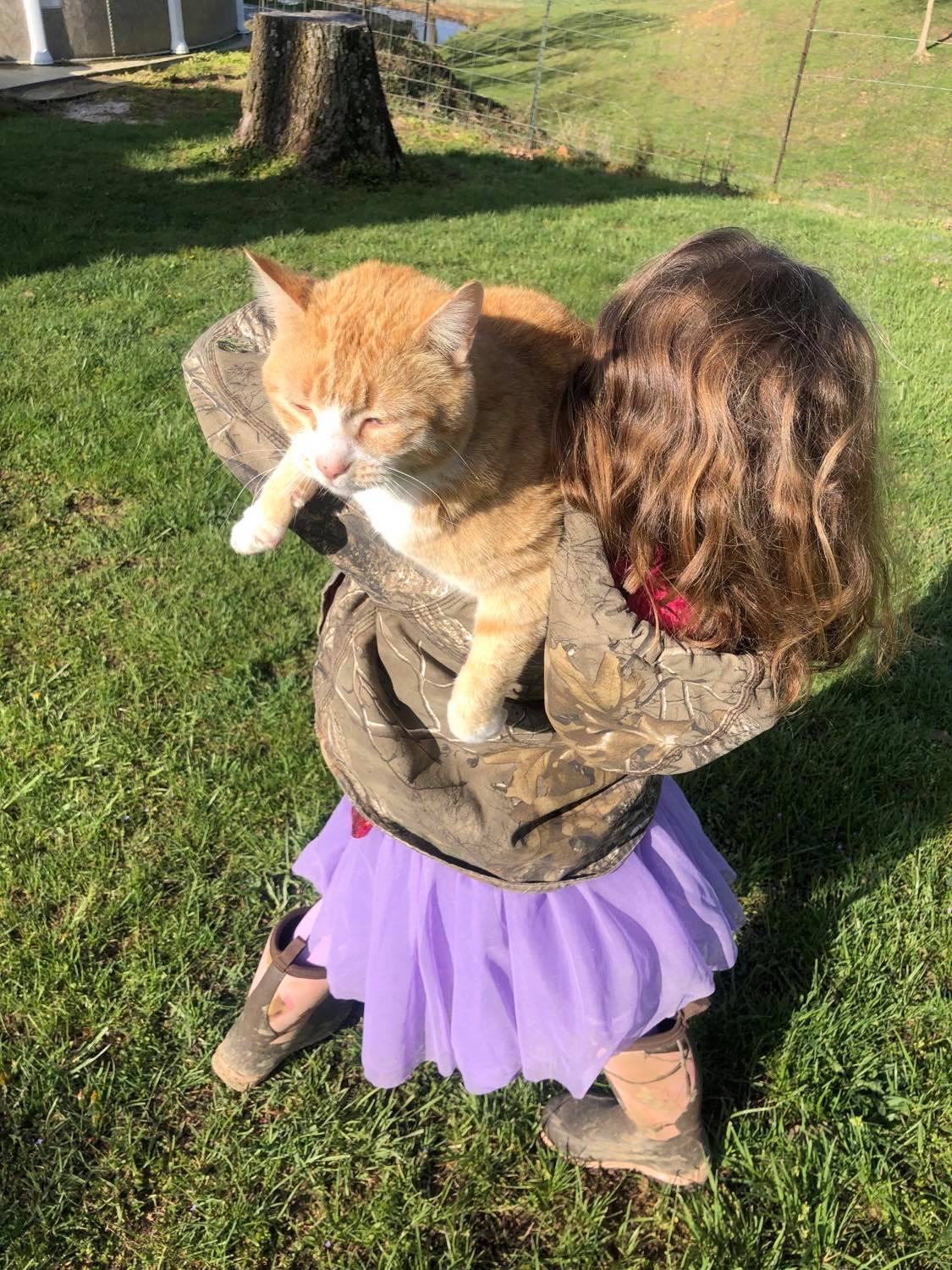
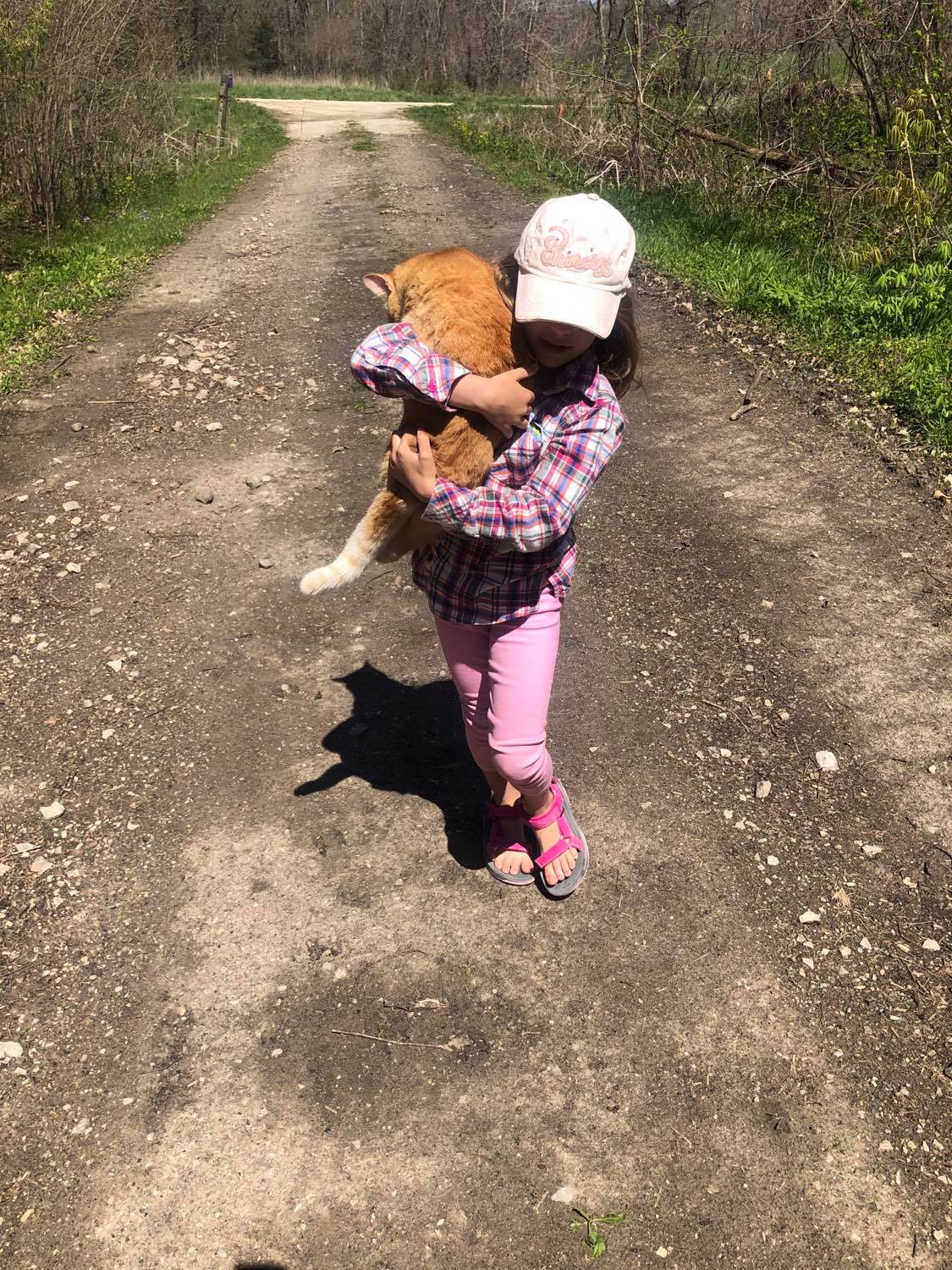
Such a patient cat!


Ruth packing Chester on a family hike.

On 2019

I just realized I didn’t blog at all in 2019, and we’re almost at the year’s end. These past two years have been so crazy busy working on the dissertation that I’ve shelved all personal writing. In fact, the last week (holiday or not) has been spent writing more for revisions on the final set of feedback than I care to admit. However, I am tickled at the thought of being done – of finishing what I’d started in more than a decade ago. I’m musing through an extensive number of new “learning bucket list” items I’ll share when the Ph.D. is actually finished.

I can safely say 2019 found us all in good health. The McGuire family is doing well. We’ve had some life changes, such as Becca leaving the fold to intern at Disneyworld, which were challenging emotionally, but such changes are inevitable. We’re all learning, and growing, and (I would like to think) improving in character. We had a wonderful holiday enjoying time with Dustin and Grace, and I’ve relished every minute of Addison’s school break. I have another week with Miles and Ruth home from school, but that will fly by, and I will be writing the bulk of it to prepare for the defense.

I didn’t want to let 2019 pass without recognizing it, but I am absolutely ready to let it go, and embrace 2020.

Educating the Littles

We are now one week into the public school system. Ruthie started kindergarten this year, and Miles is back, and in 2nd grade. Dear Husband is still adjusting to the life of a farmer and fills in little pockets of his free time (which is limited) working on the penultimate treehouse. (In full disclosure, we could probably call it a deer stand, but there’ll be nothing camo about it – pics WILL follow when it’s done). However, it’s 9:40 now, on a Thursday, and my house is completely silent. Completely silent.

It’s a productive time for me. I get more completed in these 7 hours than I used to in a full 12-hour work day. It’s nice to have time to cook again for the family, simply because I don’t have all the interruptions to the work. It’s lovely having some one-on-one lunchtime with the DH and being able to actually talk (and listen) without the interruptions of little voices. But I miss them, those little voices. I miss them desperately.

There have also been kinks to work out in the school routine. The local system switched to 4-day weeks, and we did try the 5:30 wake-up to be on the bus at 6, but when the kids don’t actually get off the bus until 4:30, I just thought that was too long a day. So now DH and I will take them in (mostly me, but I’ll foist off the duty during bad weather). We pull up alongside the other vehicles and the kids run out, and into the school, eager to see their friends and have a few minutes to play in the gym. When we take them in, they get another full hour and 10 minutes to sleep, and little brains need that time to develop. I don’t fault the school system – they’re just trying to make ends meet in a culture that doesn’t value public education enough to properly fund it.

We’re also fortunate to have *amazing* teachers. Ruthie’s kindergarten teacher is kind but firm, patient, and has no problem managing a class filled with unruly fidgeters. That merits sainthood in my book. Miles’ teacher is funny, lively, engaging and he said, “She’s not going to put up with our stuff,” right off the bat, which I thought was fantastic (mostly because he will be the first to push the buttons). The 2nd grade is also using the more tactile seating options (rocker chairs, balls in baskets, regular chairs, floor seating, etc). To me, this shows a strong desire to respond to the needs of children for movement in a longer day, and that’s encouraging to see, pedagogically in particular. The staff are great, the students are (for the most part) kind and inclusive, and the community works hard to support the local system.

Right now we’re in a place where they need to be in school. Although DH was a supporter of homeschooling when we first got together, and I was homeschooling the olders, I think his support waned over the years as he saw how hard I worked to both educate them, and ensure they had peer support systems in place. Is homeschooling easier? In some ways, perhaps. I liked staying in my pajamas all day and sleeping in another 2 hours. As I’m writing on my dissertation (on homeschooling and technology use), I think that it’s harder than many outside the homeschooling community perceive. I’d also argue, though, that public educating is harder than many outside the community (the public schooling community) perceive. Educating kids is just hard. It’s hard in a system that hypocritically says we should be doing more but then refuses to back up those ideas with policy or practice (or money!). This is the real reason behind school choice antipathy.

One of the consistent, reoccurring themes in my doctoral research is the dualism between homeschooling and public schooling, and I confess I know many families who homeschool in response to poor caliber local schools. I don’t have that issue. I’m fortunate that while we need the kids in school, for now, I trust they’re in a good place. I’m fortunate that I can drive them into school each morning so they get a bit more sleep. I’m fortunate that they can take nutritious school lunches if they don’t like the school lunch. (Although I argued with Miles on just why he wouldn’t eat the chicken patty, which was one of my favorite things about school lunches, hands down). I’m fortunate I can volunteer in the class, or send treats, or work at parties, or help with PTO. I can be our teachers’ biggest cheerleader, and I can show my children how important education is for their lives, for their development. I’m fortunate that at some point (if I keep pushing DH), I will hopefully be homeschooling again – not out of inadequacies of the system but because I just enjoy having my children about and watching them grow and learn.

Despite my blessings, it makes me sad that other families don’t have the same options, the same opportunities, or are hampered economically and can’t help drive that process more for their children. However your children are educated, make the most of it with the resources that you have, and hopefully, in another generation or two, we’ll return to a culture where school choice doesn’t determine life outcomes. Because it shouldn’t. All children deserve a quality education, supported by teachers who genuinely seek their best interest, in a safe environment, where they can be fed when they are hungry. It’s just yet another issue of society I’m disgruntled with right now, but I hope it is one that can change. And please, dear parents, don’t judge the school choices of others. I think most of us are just doing the best that we can.

I’m off to eat a chicken patty sandwich in the school cafeteria with Ruth.


History, Art, and Doing Better

I was discussing the removal of statues with a loved one and felt I should broaden my argument to my blog post. Clearly, as a teacher of race relations, I have a lot of opinions on the discussion. I will try to condense it here. The discussion was in response to this article.

What we’re ultimately addressing is removing something (whether art or a statue), that was erected during a different era. We can look at slavery now and know it’s wrong. In a different context, slavery was accepted. Was it still morally wrong at that point? Well, that depends on a lot of factors, such as how would stand politically, economically, religiously, etc. We can’t change that slavery happened. We can’t change that for 200+ years our government viewed black people as less than whites (at every level). We can’t criticize the people who stood by and (albeit passively) endorsed slavery as a system, because that was the culture of that era. When I teach about white privilege (which I believe exists) I’m constantly reiterating to students that this isn’t about white guilt – it’s about the white acknowledgment that even in today’s society whites have more opportunities afforded to them. Understanding the context is really critical. So, we’ll set “art” aside and revisit that. The argument is about removing a piece of history from a public space.

The general criticism of removing statues is that it’s removing history, and I disagree with that. History needs to preserve its place, and mankind (literate mankind, at the very least) need to have an ongoing appreciation for the ways history has shaped where we are today. That said, removing a Confederate statue, or in this case, Foster’s statue in no way changes the history that shaped that society, and the history that resultantly shapes us now. The knowledge will remain. People will continue to teach about it, to talk about it. We also can’t view history as “fixed” because that would be one of the most dangerous things we could do – as we learn more about history, we understand how the tales of the victor often get misrepresented over time, and people’s recollection of events gets fuzzy, or changes from one storyteller to the next. That’s inevitable. There’s no finite view of history. History is subjective, just as art is subjective. Are there facts involved? You bet, but history generally represents one view.

So, history is constantly being shaped and reshaped. Our sense of morality is constantly being shaped by the events of the time, our increased knowledge, and our mindfulness of others. If we are to move forward in a healthy way in society, we take the knowledge that we’ve gleaned (e.g., such as enslaving people is wrong) and try to make a better world for our children. Part of that involves recognizing the sins of the past and more so using that knowledge and growth that we have to reshape society so that it’s better. Better for whom? Well, better for everyone (including black people). As a white woman, I can academically examine the ways that slavery created systemic advantages for one group and inherent structural disadvantages for black people. I can read the books, and I can get it. I can’t, in my day to day life, say I can fully empathize with their experiences of subjugation. I haven’t experienced the consequences of that history as influencing my present-day life chances. I don’t have the emotional or visceral response to seeing a slave at the foot of a white man in a statue represented every day when I pass by it (well, I have that icky sense of injustice, but that’s because I study this stuff so much). More generally, with the removal of the Confederate statues, we don’t have any negative emotional response to seeing a white military leader’s statue (one who pushed for the continuation of the ideology of slavery as both just and valid) in a place of honor. Since we don’t know that experience, and can’t fully empathize with the harms of subjugation, how should we respond? Should we shrug? Should we say, “Ahh, they’re just making a mountain out of a molehill”? Does that incorporate any sense of the increasing knowledge and compassion and respect for mankind that we’ve made (albeit nominal) strides in over the last 75 years since the Civil Rights movement? Not really.

So, let’s turn to art. ANYONE who’s studied art knows the subjective valuation of art. We don’t know Moretti’s intent when he created this statue. It could have simply been reflecting the appreciation he had for Foster. It could have been reflecting the ideals of the time (which, arguably, 1900 America was still very segregated and Antebellum in ideals). Sure, Pennsylvania was more progressive than many states at the time, but it’s probably (as most are arguing) a reflection of a white artist’ appreciation for another white artist – a musician – and depicting the more ‘natural’ position of a black slave in a subjugated pose to a white. Was that bad for 1900? I’d argue no. I’d argue it was reflecting the time. Is it bad for 2018? The Arts Commission seems to think so. They’re probably making the decision to move it on the basis of public response, public criticism of keeping a statue up depicting a black slave at a white man’s feet in an era where we are still desperately fighting to have equality (and do not – which is key).

Are they folding to the pressure of black people? In my opinion – who cares? If any group is offended by the way a public statue is influencing them emotionally, they’re entitled to speak out about it, and the community *should* discuss the ramifications. Now, people are going to argue, “But if we let any group influence statues that they’re offended by, we wouldn’t have any statues!” I’d call BS on that. Saying I’m offended by a statue of a bull, for example, on Wall Street is markedly different than a black person saying they’re offended by the statue of a black slave at a white man’s feet in an otherwise rather progressive community. How is it different? Well, is there anything worse than enslavement? Reflect on that. If ANY group is entitled to complain about being disgruntled about something, wouldn’t it be the group that is still experiencing consequences of the system of slavery 200+ years later? It’s the same argument of saying sports teams should keep Native American names – that Native Americans need to get over it, it’s just a name, it has no meaning. False. It has no meaning to whites. It holds meaning to other people. If we’re humanitarians, we consider the impact our decisions and actions have on our fellow man.

Given that art is subjective and hits us all differently, and this is in a public, community space, I think it’s good the commission handled the situation with public input, with a vote, and then made a decision to respond. The statue isn’t going to wind up in somebody’s basement, shrouded in darkness. It will be put somewhere in a historical context, and people will still be able to view it (just like the Confederate statues) and people can talk about why it was removed. THAT conversation alone is an important one to have, especially with our children. We need to explain that we’re not removing history, we’re not reshaping it and we’re not eliminating art because “some people are offended.”

We are responding, with knowledge and compassion, to right a wrong. We are making an effort towards inclusion so that all people in a society or a community can feel comfortable walking down the street without having subjugation thrust into their faces.  America, right now, as at a critical juncture. Racism is spiking. Hate group membership has increased 65% since 2005 (mostly due to the internet), and 20% in the last 3 years.  The Klan is having open rallies. Nazis are walking in our streets. Do we want to roll back progress simply for the argument that a statue is so important in a historical context it needs to remain where it’s at? Is that statue worth more than any black person’s feelings? I’d argue no.
A Good Mate

This past weekend we celebrated Nathan’s birthday (I won’t say which birthday), and I enjoy having kids back home and family stop in to visit on these special days. We’ve just passed our 10 year milestone since we met and started dating. I considered all the growth that both he and I have seen in the last 10 years and it’s amazing.

I see the ways couples manage relationships covered in the media, and I think there’s too much emphasis upon perfection, upon finding that soul mate that is everything in your eyes. Not only is this unachievable, but I think it creates a burden of pressure, an onerous obligation, as each partner tries to be something they’re not or cover up their flaws. Speaking for myself, I can’t hide my character flaws from my family. Frankly, I don’t want to expend emotional energy trying to be something I’m not. I can work to mitigate them, to try not to revel in them as just a part of myself and certainly not to rationalize or justify those flaws. However, when I’m tired and crabby and the day is almost done, I know if I’m snarky I can ask forgiveness, and it is granted. As I’ve tried to point out to my children, there is no such thing as the perfect mate – there is such a thing as the perfect mate for you, though.

If you have a partner whose good outweighs the bad, one who treats you well (honestly and respectfully are my biggest issues) and works to help you achieve your goals, that’s a good mate. When we have those imperfections of character (my husband is a bit, err, stubborn, in nature, whereas it has been noted that I am a bit, err, ‘managerial’), you work around those traits. You accept your partners’ flaws as you hope they accept your own. You work to highlight the positives (the work ethic, as I’ve touched upon repeatedly through these blogs, or the dedication to family, or the generosity in spirit). My husband is the most generous man I’ve known, and I count that as a blessing and a boon to our partnership. I know my husband will help me achieve my personal goals (such as pursuing a PhD) even if it’s not in his realm of interest. I know he values I’ll help him achieve his personal goals (such as being a farmer), even if it’s not in my realm of interest. We build up – we don’t tear down. That’s a hallmark of a good mate.

So shout out to my wonderfully supportive husband Nathan. Thanks for all you do for us, for our children, and for our dreams. Thank you for being my “perfect for me mate”.